


Where Are Calipari's Disciples Now?
- Apr 11, 2016
- 4 min read

It is well known the impact John Calipari, current University of Kentucky men’s basketball coach, has had on the sport of basketball, and I’m not speaking just in terms of just the collegiate level. Calipari is on record saying that he would never “hold [a player] back”, and to all the people that say he is rigging the system of the minimum one-year requirement a player has to wait from their high school graduation, he simply responds “it’s not my rule.” In an interview with Fox Sports in 2015, Calipari even went so far as to say that if he led a team to a national championship but none of his players got drafted, he would be disappointed
Things like this go to show why Kentucky is so superb at recruiting top stars year in and year out. Calipari keeps it real with players. He wants you to pursue what you feel is your purpose; he is not here to tell you how great school is, as a player you should know that, but if you truly feel your talents are better suited in another field, he will support it and he will get you there. He is not bending any rules, he is simply using the rules put in place to develop and mold his own philosophy of coaching and mentoring to young adults.
With standouts from this year's Kentucky team like sophomore Bob Cousy Point Guard of the Year award recipient Tyler Ulis and potential lottery pick Jamal Murray declaring for the 2016 NBA Draft, we take a look back at how former Calipari players have faired in the pros.
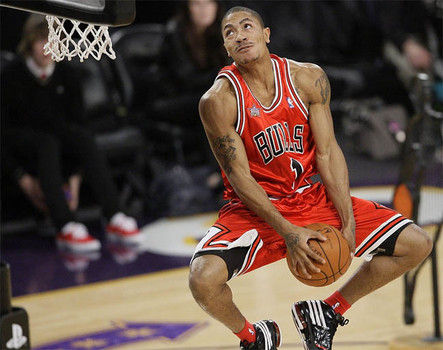
Derrick Rose made an immediate impact on the league in 2008 with his explosiveness, outright speed and acceleration, strength, and ferociousness going to the basket. This was felt in his Rookie of the Year honors as he led his hometown Chicago Bulls to the playoffs against the Celtics. In his playoff debut, Rose logged 36 points along with 11 assists in a road win. He then went on to become an All-Star and the youngest MVP in league history. While he has had injury-riddled seasons since then, many are noticing Rose’s return to his old playing style, with more aggression and less hesitancy.
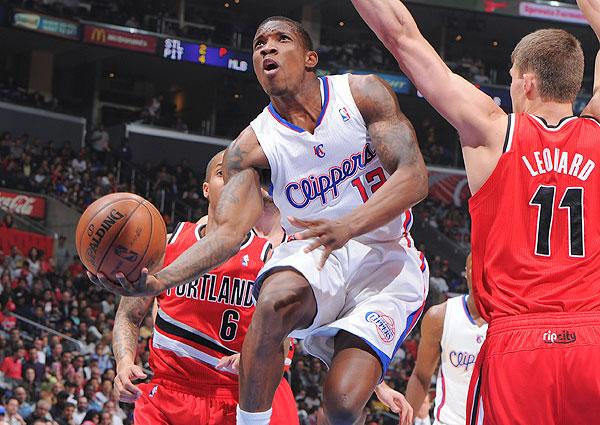
Eric Bledsoe was drafted 18th overall in 2010, and he was named to the All-Rookie 2nd team after his inaugural season. Bledsoe played limited minutes and even had a stint in the NBA Developmental League after the Clippers acquired Chris Paul, but Bledsoe then joined the Phoenix Suns and in the three years he has been there, he has averaged at least 17 points, four assists, 5.5 rebounds, and 1.5 steals. A torn meniscus ended his 2015-2016 season prematurely, but he expects to make a full recovery and return to his usual, stat-stuffing, fiery self.

I, personally, had high hopes for Marquis Teague, who declared for the draft after one year at Kentucky to then be drafted 29th overall in the 2012 draft. This is partially because I’m a Bulls fan, but I watched a lot of that 2012 championship season, and Kentucky was so loaded that I felt all of his potential had yet to be fully unleashed. Unfortunately, things did not pan out so well, as he has bounced around from the Bulls, Nets, and 76ers in the NBA, to the Iowa Energy and Oklahoma City Blue for the D-League, where he still remains active today.

James Young went from being second-team All SEC as a freshman to being drafted 17th overall by the Celtics to going back and forth from and to the D-League, where he remains assigned to the Red Claws. He was named to the Final Four All-Tournament Team, and while he has shown great ability in the D-league, he has struggled to truly make those skills translate to the next level.
I could go on and on all day about numerous other athletes that played under Calipari, like Julius Randle, Karl Anthony-Towns, Devin Booker, Nerlens Noel, Archie Goodwin, etc. Some cases pan out extremely well and provide evidence for the argument supporting Calipari, and others do not see success and lose the opportunity for a free education, providing fodder for pessimists that dislike John Calipari’s modus operandi.
The point remains clear: the system is flawed. Whether Calipari enables the system or not is irrelevant to the fact that the system is still in place. Maybe there is not one clear cut answer to the problem. Some kids genuinely do not care for school and we should respect that school is not meant for everybody. Others like school, but value money and fame more. Some feel that the students should be paid, others worry about injury in the minimum year requirement.
There are so many factors in this polarizing topic and it’s incredibly difficult to come up with a solution, but the fact remains that as long as the system is still etched in the rulebooks, Calipari will rule the game as he sees appropriate. It is not that he wants to see some kids throw their lives away and others see immediate success in the league. It’s not as if he doesn’t care about the success and results at Kentucky, but the rules were placed in front of him, and unlike other coaches, instead of complaining about them or trying to instill his own form of rebellion or higher moral status, he does not want to control players’ lives and he will use whatever he has in front of him. If you want the NBA, he wants to get you there; if you want to stay, he wants to get you a title. John Calipari isn’t bending rules, he’s just scaring people with his bluntness, transparency, and outright defiance of convention. But, as the old adage goes, don’t hate the player, hate the game.


Comments